

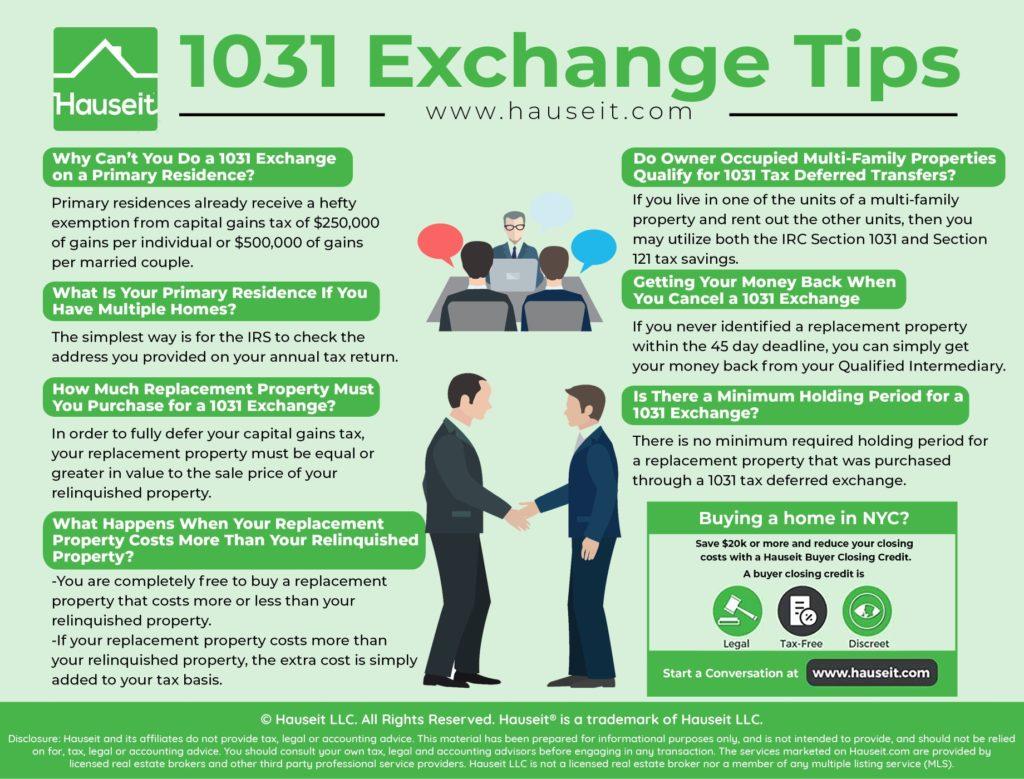
In the complex landscape of real estate investment, savvy investors often seek avenues to maximize their returns while minimizing tax liabilities. One prominent mechanism that has garnered attention is the 1031 Exchange, a provision under Section 1031 of the Internal Revenue Code that allows investors to defer capital gains taxes on the sale of investment properties by reinvesting the proceeds into similar properties. This article aims to provide a comprehensive overview of the 1031 Exchange, elucidating its benefits, the regulations that govern it, and the procedural steps involved in executing a successful exchange. By equipping readers with a clear understanding of this tax-deferral strategy, we hope to empower real estate investors to make informed decisions that can enhance their investment portfolios while adhering to legal guidelines.
Table of Contents
- Understanding the Fundamentals of 1031 Exchange and Its Benefits for Real Estate Investors
- Key Requirements and Timelines for a Successful 1031 Exchange Transaction
- Strategies for Identifying Like-Kind Properties in a 1031 Exchange
- Common Pitfalls to Avoid and Recommendations for a Smooth Exchange Process
- In Retrospect
Understanding the Fundamentals of 1031 Exchange and Its Benefits for Real Estate Investors
The 1031 Exchange, governed by Section 1031 of the Internal Revenue Code, allows real estate investors to defer capital gains taxes on the sale of an investment property by reinvesting the proceeds into a like-kind property. To qualify, the exchange must meet specific criteria, including identifying a replacement property within 45 days and closing on it within 180 days. This tax-deferral strategy can significantly enhance an investor’s purchasing power, enabling them to grow their real estate portfolio without the immediate burden of taxes.
Investors can reap a variety of benefits through a well-executed 1031 Exchange, such as:
- Tax Deferral: Postponing tax liabilities allows more capital to be employed in new investments.
- Portfolio Diversification: Investors can exchange properties to diversify their holdings and reduce risk.
- Increased Cash Flow: By upgrading to higher-quality properties, investors can enhance their income potential without the tax penalty.
- Estate Planning: 1031 Exchanges can be part of a strategy to pass on assets to heirs while minimizing tax impacts.
| 1031 Exchange Benefits | Description |
|---|---|
| Capital Growth | Allows reinvestment of full sale proceeds to capitalize on market opportunities. |
| Tax Benefits | Defers taxation, maximizing investment potential over time. |
| Flexibility | Enables property swaps, increasing investment strategy choices. |
Key Requirements and Timelines for a Successful 1031 Exchange Transaction
When engaging in a 1031 exchange, certain key requirements must be met to ensure a smooth transaction. One crucial aspect is the identification of replacement properties. Within 45 days of selling the original property, the investor must formally identify up to three potential properties or more if they are under certain conditions. It is also important to adhere to the 180-day timeline from the date of sale for completing the acquisition of the new property. Any delays in these timeframes can jeopardize the whole exchange process. Maintaining meticulous records and documentation throughout this period is vital for compliance with IRS regulations.
Additionally, to qualify for a 1031 exchange, both properties involved must meet the criteria outlined in tax code section 1031. This generally means the properties should be held for investment or productive use in a trade or business. Furthermore, the properties must be of like-kind, ensuring they are of a similar nature even if they differ in grade or quality. Investors are reminded to engage with qualified intermediaries who can facilitate the exchange process effectively, as they play a crucial role in holding the funds between the sales and purchases. For clarity, here’s a quick overview of the timelines:
| Action | Timeline |
|---|---|
| Identify replacement property | Within 45 days of sale |
| Complete acquisition | Within 180 days of sale |
Strategies for Identifying Like-Kind Properties in a 1031 Exchange
Identifying like-kind properties is a crucial step in executing a successful 1031 exchange, and numerous strategies can help streamline this process. First, consider expanding your search criteria by exploring various property types within the same category. For instance, if you’re exchanging a residential rental property, you may also consider multifamily units or commercial properties that meet the 1031 exchange requirements. Additionally, leveraging online platforms and databases can provide access to a wider range of potential properties, allowing for a more thorough assessment of available options.
Networking within real estate circles can also prove invaluable in discovering suitable like-kind properties. Establishing relationships with real estate agents, investment clubs, and property management companies can yield insights into off-market opportunities that might align with your investment goals. Be sure to prioritize properties that fulfill the “like-kind” criteria, which generally includes similar uses, while keeping an eye on the potential for appreciation and cash flow. Utilizing a well-organized checklist of your requirements can help simplify this comparison:
- Property Type: Residential, commercial, or industrial.
- Location: Within the same state or region.
- Investment Potential: Cash flow and appreciation potential.
Common Pitfalls to Avoid and Recommendations for a Smooth Exchange Process
In the process of executing a 1031 exchange, several common pitfalls can obstruct a smooth transaction. To maximize the benefits of tax deferral while minimizing disruptions, avoid the following mistakes:
- Missing Deadlines: The 45-day identification and 180-day closing periods are strict. Late actions can invalidate the exchange.
- Inadequate Research: Failing to thoroughly investigate potential replacement properties could lead to poor investment decisions.
- Neglecting Qualified Intermediary Selection: Choosing an unqualified intermediary may complicate or jeopardize the exchange process.
To help navigate these challenges, consider the following recommendations:
- Start Early: Allow adequate time for identifying replacement properties and facilitating transactions.
- Engage Professionals: Work with experienced real estate agents, attorneys, and tax advisors who specialize in 1031 exchanges.
- Document Everything: Maintain clear records of all communications, transactions, and decisions to ensure compliance and transparency throughout the process.
| Aspect | Recommendation |
|---|---|
| Timeline | Keep a detailed calendar of all deadlines. |
| Property Research | Visit multiple properties and consult market analyses. |
| Professional Help | Hire experts with a proven track record in 1031 exchanges. |
In Retrospect
the 1031 Exchange presents a valuable opportunity for real estate investors seeking to optimize their portfolios while deferring tax liabilities. By understanding the mechanics of this investment strategy, including the eligibility criteria, timelines, and potential pitfalls, investors can navigate the complexities of property exchanges with greater confidence. As with any significant financial decision, consulting with a qualified tax advisor or real estate professional is essential to ensure compliance with IRS regulations and to tailor the 1031 Exchange strategy to one’s unique financial goals. With proper planning and informed decision-making, the 1031 Exchange can serve as a powerful tool in enhancing wealth accumulation and achieving long-term investment success. Thank you for reading our guide, and we hope it provides you with the insights necessary to make informed decisions in your real estate endeavors.