

Introduction
Understanding mortgage amortization and payment structures is essential for anyone navigating the landscape of home financing. as one of the most significant financial commitments many individuals will undertake, a mortgage represents not only a means to homeownership but also a complex financial instrument that impacts long-term financial health. This comprehensive guide aims to demystify the intricacies of mortgage amortization—the process through which loan payments are systematically applied to both principal and interest over the life of the loan. By exploring key concepts, formulas, and payment strategies, this article serves as a valuable resource for prospective homebuyers, current homeowners considering refinancing, and finance professionals seeking to enhance their knowledge of mortgage products. Whether you are looking to better understand your mortgage statement or strategize for future payments, this guide will provide you with the foundational knowledge necessary to make informed financial decisions.
Table of Contents
- Understanding the Fundamentals of Mortgage Amortization
- Analyzing Different Amortization Schedules and Their Impacts
- Strategies for Managing Mortgage Payments Effectively
- Evaluating Your Options for Early Repayment and Refinancing
- insights and Conclusions
Understanding the Fundamentals of Mortgage Amortization
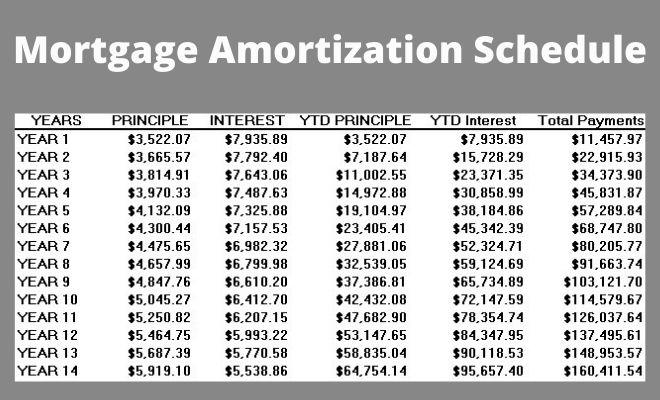
Mortgage amortization is the process by which a borrower gradually repays a loan through regular, scheduled payments over time. Each payment typically covers both principal and interest, meaning a portion of the payment reduces the loan balance while another portion serves as interest on the remaining balance. Understanding this process is crucial for homeowners and potential buyers, as it allows them to anticipate the total cost of their mortgage over time. An essential concept in amortization is the amortization schedule, which details how much of each payment is allocated towards interest and principal throughout the life of the loan.
To illustrate the effect of different loan terms and interest rates, consider the following factors that can influence your amortization schedule:
- Loan amount: The total amount borrowed affects monthly payments and interest over time.
- Interest Rate: A lower interest rate results in less interest paid benefiting the borrower.
- Loan term: Shorter terms typically mean higher monthly payments but less interest paid over the life of the loan.
- Payment Frequency: Monthly payments are standard, but more frequent payments can reduce the total interest.
| Loan Term | Monthly Payment | Total Interest paid |
|---|---|---|
| 15 Years | $1,450 | $40,000 |
| 30 Years | $1,200 | $80,000 |
Analyzing different Amortization Schedules and Their Impacts
Amortization schedules serve as a vital tool for understanding how loan payments are structured over time. By breaking down each payment into principal and interest components, borrowers can gain a clearer picture of how their debts are reducing and how much interest they are paying at different stages of their loans. Fixed-rate amortization schedules maintain the same interest rate throughout the loan term, allowing for predictable payments. In contrast, adjustable-rate mortgage (ARM) schedules often start with lower initial payments that can change periodically, influencing long-term planning and budgeting. Understanding these differences is crucial for borrowers to align their payment strategies with their financial goals.
When analyzing the impact of various amortization schedules, it’s essential to consider their implications on total interest paid and equity built over time. For instance, a shorter amortization period generally results in higher monthly payments but less total interest paid, enabling homeowners to build equity faster. The following table illustrates a simple comparison of a 30-year fixed-rate mortgage versus a 15-year fixed-rate mortgage:
| Loan term | Monthly Payment | Total Interest Paid | Time to Build Equity |
|---|---|---|---|
| 30 Years | $1,000 | $150,000 | 30 Years |
| 15 Years | $1,400 | $50,000 | 15 Years |
This analysis helps borrowers weigh the trade-offs of immediate cash flow against long-term savings, demonstrating why selecting the right amortization schedule is vital in making informed financial decisions regarding homeownership.
Strategies for Managing mortgage Payments Effectively
Managing mortgage payments effectively can substantially ease financial stress and ensure long-term stability. Start by creating a comprehensive budget that includes not just your mortgage payment but also property taxes, home insurance, and maintenance costs. Use a budgeting app or spreadsheet to track your monthly expenses and determine how much you can comfortably allocate toward your mortgage payment. Additionally, consider automating your payments to avoid late fees and maintain a spotless payment history. Setting reminders for payment dates can also help keep you on track, especially if you prefer to make the payment manually.
Another powerful strategy is to explore options for making additional payments. Principal-only payments can reduce the overall interest paid over the life of the loan. Even small extra payments can make a significant impact. Here are a few ways to make this work:
- consider making bi-weekly payments rather than monthly payments.
- Use any windfalls, such as tax refunds or bonuses, to make lump-sum payments.
- Refinance when interest rates drop to reduce your monthly payment or shorten the term of your loan.
To illustrate the benefit of making additional payments, here’s a simple comparison of total interest savings on a hypothetical loan:
| Payment Option | Total Interest Paid | Total Payments Made |
|---|---|---|
| Standard Payments | $150,000 | $450,000 |
| Bi-Weekly Payments | $130,000 | $410,000 |
| Bi-Weekly Payments + Extra $100 | $115,000 | $385,000 |
Evaluating Your Options for Early Repayment and Refinancing
When considering early repayment and refinancing options, it is crucial to weigh the benefits against potential costs. Many homeowners find that paying off their mortgage early can lead to significant interest savings over the life of the loan. Though, it’s essential to understand the specific terms of your mortgage agreement, including prepayment penalties that may apply. Additionally, refinancing can offer a way to lower your interest rate or switch to a different loan type, but closing costs and fees should be factored into your calculations. Here are some key points to consider:
- Current Interest Rates: Compare your current rate with current market rates.
- Loan Terms: Evaluate the pros and cons of extending or shortening your loan term.
- Financial goals: Align any changes with your long-term financial objectives.
To assist in your decision-making process,a simple table can be informative:
| Option | Pros | cons |
|---|---|---|
| Early Repayment | Lower total interest payments | Possible prepayment penalties |
| Refinancing | Lower monthly payments | closing costs |
making an informed decision requires careful analysis of your financial situation and the terms of your current mortgage. Calculating potential savings and understanding the long-term impact of either option will help you choose the best path forward.
Insights and Conclusions
understanding mortgage amortization and payments is crucial for anyone looking to navigate the complexities of home financing. By grasping the principles of amortization schedules, interest rates, and payment structures, borrowers can make informed decisions that align with their financial goals. This comprehensive guide has outlined the key components of mortgage payments,from fixed-rate to adjustable-rate mortgages,as well as strategies for early repayment and refinancing options. Ultimately, being well-informed empowers you to negotiate better terms, minimize costs, and secure a mortgage that best fits your personal circumstances. We encourage readers to leverage this knowledge as they embark on their journey toward homeownership and financial stability.