

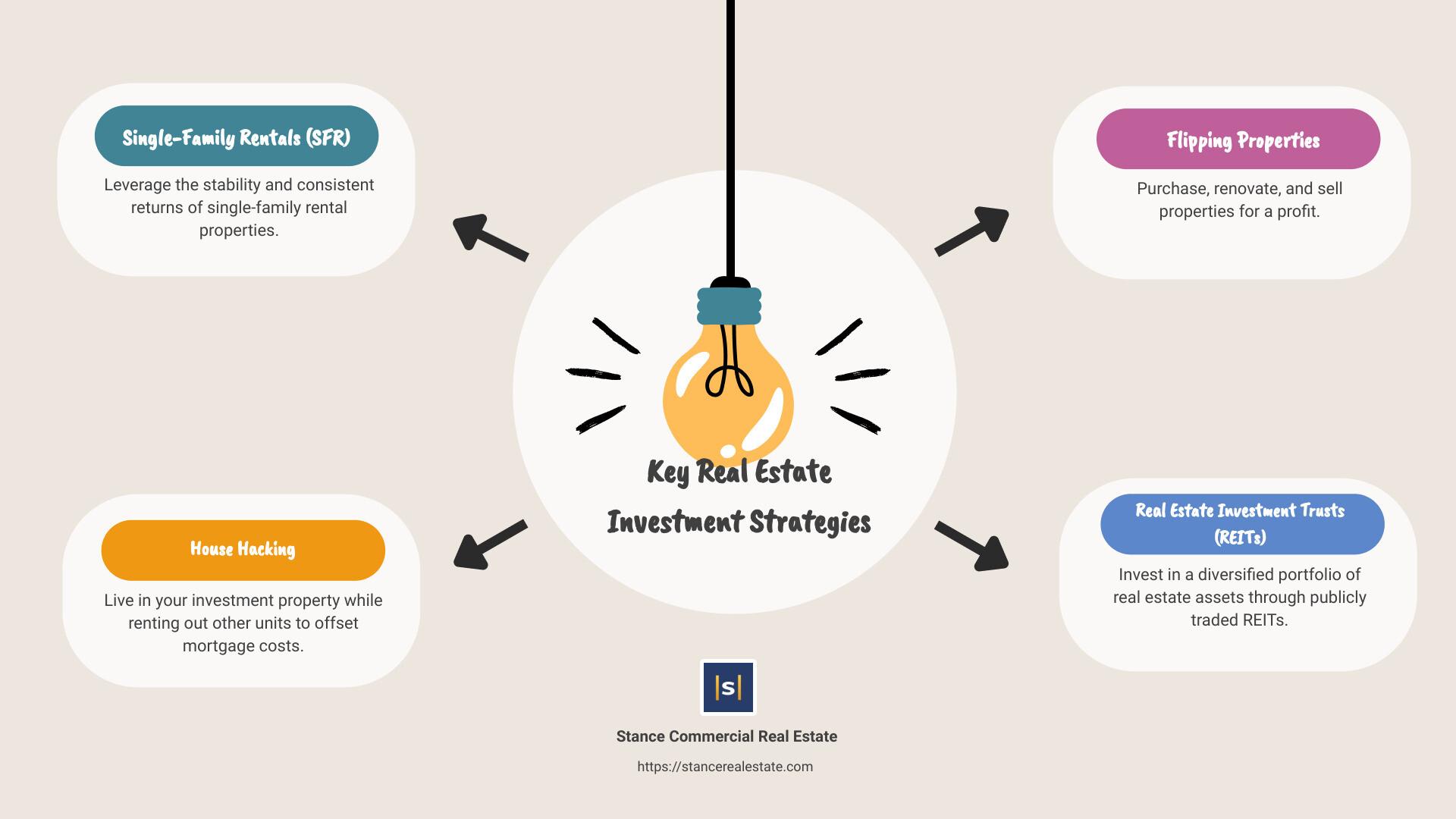
In today’s dynamic financial landscape, real estate investment stands out as a potent avenue for wealth creation adn portfolio diversification. As global markets evolve and economic trends shift,investors are presented with an array of opportunities that extend far beyond conventional buying and selling of properties.This article aims to delve into the myriad of real estate investment strategies that can be employed to achieve enduring success. From residential rental properties and commercial ventures to innovative approaches such as real estate investment trusts (REITs) and crowdfunding platforms, understanding the nuances of these diverse strategies is crucial for both novice and seasoned investors. By exploring the advantages and risks associated with each method,this analysis will equip readers with the insights necessary to navigate the complexities of the real estate market and make informed investment decisions that align with their financial goals. Join us as we uncover the keys to unlocking success in real estate investment.
Table of Contents
- Identifying and Analyzing High-Growth Markets for Real Estate Investment
- Leveraging Technology and Data Analytics in Property Investment Strategies
- Diversifying Real Estate Portfolios: Balancing Risk and Reward
- Sustainable and Impact Investing in Real Estate: Trends and Best Practices
- Concluding Remarks
Identifying and Analyzing High-Growth Markets for Real Estate investment
Identifying high-growth markets for real estate investment requires a strategic approach, encompassing various factors that signal potential for rapid recognition and profitability. Key indicators include population growth, which often leads to increased demand for housing; job creation, as an expanding employment base attracts new residents; and infrastructure progress, such as new transportation links and commercial projects that enhance a location’s desirability. Investors should also analyze local trends in rental yields and property sales, keeping an eye on emerging neighborhoods that demonstrate revitalization and increased interest.
Conducting thorough market analysis can also benefit from leveraging technology and data analytics. Utilizing tools that assess market volatility and track historical pricing trends can provide insights into future performance. Additionally, incorporating nearby amenities such as parks, schools, and healthcare facilities can enrich the attractiveness of a potential investment area. The following table summarizes critical factors to evaluate:
| Factors | Importance | Indicators |
|---|---|---|
| population Growth | High | Increase in residents |
| Job Creation | High | New businesses opening |
| Infrastructure Development | Medium | New transit lines |
| Rental Yields | High | Increasing rental rates |
| Local Amenities | Medium | Presence of parks,schools |
Leveraging Technology and Data Analytics in Property Investment Strategies
In today’s competitive property market,integrating technology and data analytics into investment strategies has become imperative for investors seeking to maximize their returns. By harnessing the power of big data, investors can gain invaluable insights into market trends, property values, and demographic shifts. With the right tools, they can analyze key metrics such as:
- Market demand and supply dynamics
- Historical sales data and price trends
- Rental yield potential
- Neighborhood growth patterns
Data-driven decision-making not only mitigates risk but also enhances strategic planning. Advanced analytics allows investors to project future market behaviors, enabling them to identify lucrative investment opportunities ahead of competitors. Some popular technological tools and methodologies include:
- Predictive modeling algorithms
- Geographic Data Systems (GIS) for spatial analysis
- Automation tools for property management
- Mobile applications for monitoring investment performance
Moreover, collaboration with data analytics platforms can provide access to real-time information and insights, allowing investors to fine-tune their strategies continually. The implementation of these technologies not only streamlines processes but also fosters a more informed and agile investment approach.
Diversifying Real Estate Portfolios: Balancing Risk and Reward
In real estate investment, achieving a balance between risk and reward is crucial for long-term success. Investors can strategically diversify their portfolios by incorporating a variety of property types, such as residential, commercial, and industrial properties. This approach not only helps to mitigate risks associated with market fluctuations, but it also opens up opportunities for higher returns. Furthermore, integrating real estate investment trusts (REITs) and crowdfunding platforms can enhance diversification, allowing investors to access diverse assets and markets without notable capital outlay.
When considering a diversified real estate portfolio, it’s significant to evaluate multiple factors that influence risk and return. A well-rounded strategy should include an analysis of location, market trends, and property management capabilities. Utilizing a table to compare potential investments can streamline the decision-making process:
| Investment Type | Risk Level | Potential Return |
|---|---|---|
| Residential Property | Low to Medium | 3% – 8% |
| Commercial Property | Medium to High | 7% – 15% |
| REITs | Medium | 5% – 10% |
| Crowdfunding Real Estate | Medium | 8% – 12% |
Sustainable and Impact Investing in Real Estate: Trends and Best Practices
In the evolving landscape of real estate, sustainable and impact investing has gained notable prominence as investors increasingly prioritize ethics alongside financial returns. This shift has led to the emergence of several key trends that define the current market:
- Green Certifications: Properties that achieve certifications such as LEED or BREEAM tend to attract progressive investors and higher valuation.
- Community Engagement: Investments focused on enhancing community spaces—not just profitability—are gaining traction, promoting both social and environmental benefits.
- Energy Efficiency Enhancements: Investing in technology that reduces energy consumption aligns with global sustainability goals while also cutting operational costs.
Adopting best practices is essential for successful sustainable investing in real estate.Investors should consider:
- due Diligence: Thorough evaluation of a property’s sustainability practices and impact can identify hidden potential and risks.
- Long-term Value Creation: Strategies should not only focus on immediate returns but also on value appreciation through enhanced environmental performance.
- Partnerships with Local Governments: Collaborating with municipal initiatives can open up new opportunities for funding and compliance with regulatory standards.
To illustrate the effectiveness of impact investing strategies, the following table summarizes the benefits achieved through sustainable practices:
| Strategy | Benefits |
|---|---|
| Green Retrofits | Lower operating costs; improved property value |
| Community-Oriented Developments | Stronger local support; reduced vacancy rates |
| Smart Technology Integration | Enhanced tenant satisfaction; increased energy efficiency |
Concluding Remarks
the realm of real estate investment offers a wealth of opportunities for those willing to explore diverse strategies. By understanding and leveraging various approaches—from residential and commercial properties to real estate investment trusts (REITs) and crowdfunding platforms—investors can tailor their portfolios to align with their unique financial goals and risk tolerance. As the market continues to evolve, staying informed about emerging trends and techniques will be crucial for sustaining success in this dynamic landscape. Ultimately, a comprehensive and adaptable investment strategy, grounded in research and informed decision-making, will empower you to navigate challenges and capitalize on the potential of this ever-changing industry. As you embark on your real estate investment journey,remember that diversity in strategy is not just a choice; it is an essential pathway to achieving long-term growth and resilience in your investment endeavors.