

Introduction
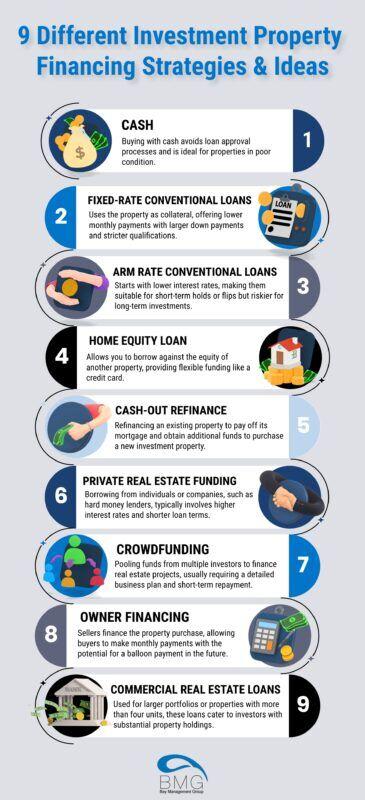
investing in real estate can be a lucrative endeavor, offering opportunities for wealth accumulation and portfolio diversification. However, the path to successful investment property acquisition is often impeded by the challenge of securing adequate financing. To navigate this complex landscape, prospective investors must adopt a strategic approach tailored to their individual circumstances and objectives. This comprehensive guide aims to illuminate the various strategies available for financing investment properties, exploring traditional and alternative funding sources, leveraging equity, and optimizing debt-to-income ratios. By delving into the intricacies of mortgage options, private lending, and creative financing techniques, this article provides a valuable resource for investors seeking to enhance their financial acumen and maximize their investment potential. Whether you are a seasoned investor or a newcomer to the real estate market, understanding these financing strategies is crucial for achieving long-term success in property investment.
Table of Contents
- Understanding Different Financing Options for Investment Properties
- Evaluating the Risks and Returns Associated with Property Investment Financing
- leveraging Creative Financing Techniques for Enhanced investment Opportunities
- Establishing a Comprehensive Financial Plan for sustainable Property Investment
- To Wrap It Up
Understanding Different Financing Options for Investment Properties
When considering financing for investment properties, it’s crucial to explore the variety of options available to suit diverse investing strategies and financial situations. Among the most common alternatives are traditional mortgages, which are often appealing due to their competitive interest rates and relatively straightforward request processes. Though, investors should also evaluate hard money loans, typically offered by private lenders at higher interest rates, allowing for quicker access to cash but with different terms. Additionally, there are seller financing methods, wherein the property seller acts as the lender, creating an opportunity for more adaptability in payment structures and qualifying criteria.
Understanding the nuances between these options can significantly impact your investment success. For instance, utilizing cash purchases can streamline transactions, providing leverage in negotiations and avoiding interest payments. Conversely, leveraging equity financing can enable investors to tap into the equity of existing properties to fund new acquisitions, which may be especially beneficial for those looking to expand their portfolios without significant out-of-pocket expenses. Below is a simplified overview of four primary financing methods:
| Financing Option | Advantages | Disadvantages |
|---|---|---|
| Traditional Mortgage | Low-interest rates, long repayment terms | Strict qualifying criteria |
| Hard Money Loan | Fast funding, fewer regulations | High-interest rates, short terms |
| Seller Financing | Flexible terms, easier qualification | Potentially higher costs, seller risk |
| Cash Purchase | No interest payments, strong negotiation power | Ties up capital, less liquidity |
Evaluating the Risks and Returns Associated with Property Investment Financing
When assessing property investment financing, it’s crucial to analyze both the potential risks and returns. Returns in property investments can stem from multiple sources, such as rental income and capital appreciation. Though, these returns are never guaranteed. Factors such as fluctuations in the real estate market, the impact of economic downturns, and changes in local rental demand can all affect profitability. Additionally, leveraging loans to finance property can amplify returns, but it also introduces greater risk. Investors must account for interest rates, repayment terms, and the possibility of negative cash flow during periods of vacancy or unexpected expenses.
In contrast, the risks can be categorized into several key areas: financial, market, and operational. Financial risks include interest rate increases that can elevate borrowing costs, and also potential foreclosure if payments cannot be met.Market risks involve property devaluation due to shifts in economic conditions or an oversaturated local market. Operational risks stem from property management issues, such as tenant disputes or maintenance liabilities, which can incur unexpected costs. To mitigate these risks, investors can conduct thorough market research, actively engage in property management practices, and establish emergency funds to cover unforeseen expenses. Below is a simplified overview of the risk-return trade-off:
| Factor | Potential Returns | Risks |
|---|---|---|
| Rental Income | Stable cash flow | Vacancies or low demand can lead to income loss |
| Capital Appreciation | Long-term wealth growth | Market fluctuations can decrease property value |
| Leverage | Enhanced returns from financed deals | Increased liability and risk of foreclosure |
Leveraging Creative Financing Techniques for Enhanced Investment Opportunities
Investors are increasingly turning to creative financing techniques to unlock enhanced opportunities in the competitive real estate market. These methods enable them to acquire properties with minimal capital upfront while maximizing returns. Key techniques include subject-to financing, where the buyer takes over the existing mortgage of the seller without formally assuming it; seller financing, which allows the seller to act as the lender, providing flexible terms for the buyer; and lease options, enabling the investor to lease a property with the option to purchase later. Each technique requires a comprehensive understanding of legal implications and negotiating skills, making due diligence essential for success.
To effectively implement these methods, investors should consider establishing strong relationships with motivated sellers and tapping into niche marketing strategies. Creating a network of professionals,such as attorneys and mortgage brokers familiar with creative financing,can also streamline the process. Additionally, utilizing tools like real estate investment calculators can aid in assessing the viability of each opportunity. Below is a comparison of common creative financing methods to help you identify which might best suit your investment goals:
| Financing Technique | Benefits | Risks |
|---|---|---|
| Subject-To Financing | No need for new financing Preserves seller’s credit |
Potential for due-on-sale clause investor assumes risk of existing loan |
| Seller Financing | Flexible terms Faster closing |
Higher interest rates Seller may face cash flow issues |
| Lease Options | Low initial investment Option to buy later |
Potential loss of option fee Market changes can affect resale |
Establishing a Comprehensive Financial plan for Sustainable Property Investment
Developing a robust financial strategy is essential for anyone venturing into the realm of property investment. A comprehensive financial plan not only outlines your current financial position but also projects your future potential based on investment strategies and market conditions. Begin by performing a thorough cash flow analysis to understand the income and expenses associated with your investment property. This includes evaluating the potential rent you can charge,property taxes,maintenance costs,and any unexpected expenditures. Utilize tools such as spreadsheets or property management software to maintain meticulous records, allowing for greater transparency and control over your investment portfolio.
In addition,leverage financing options such as mortgages,equity partnerships,or real estate investment trusts (REITs) to optimize your funding strategy.It’s vital to consider the impact of interest rates and repayment terms on your overall budget. Make informed decisions about leveraging debt by comparing short-term versus long-term financing solutions to find the most suitable option for your financial situation. A well-structured financing strategy may involve:
- Maximizing equity through cash reserves and personal savings.
- Diverse funding sources that minimize risk exposure and enhance liquidity.
- Regular financial reviews to adjust strategies based on market trends.
To visualize your financial framework, consider using the following table to summarize essential financial metrics:
| Metric | Value |
|---|---|
| Projected Annual Income | $30,000 |
| Annual Expenses | $12,000 |
| Net Operating Income | $18,000 |
| Loan-to-Value Ratio | 75% |
To Wrap It Up
Conclusion
In navigating the complex landscape of investing in real estate, a well-structured financing strategy is paramount to maximizing your returns while mitigating risk. This comprehensive guide has outlined a variety of financing options, from traditional mortgages and private loans to creative financing and syndication methods. Each strategy carries its own set of advantages and challenges, demanding careful consideration and alignment with your investment goals.
As the real estate market continues to evolve, staying informed about emerging financial tools and trends is essential for investors aiming to enhance their portfolios. Furthermore, understanding the implications of leveraging, interest rates, and market cycles will enable you to make informed decisions that can significantly impact your investment’s performance.
Ultimately, successful financing is not merely about acquiring property; it is about fostering a sustainable investment strategy that positions you for long-term success. With diligence in research and planning, you can adapt your financing approach to the specific opportunities and challenges presented in the ever-changing real estate surroundings. As you embark on your investment journey, equip yourself with knowledge and remain proactive in refining your financing strategies to achieve optimal results in your property investments.