

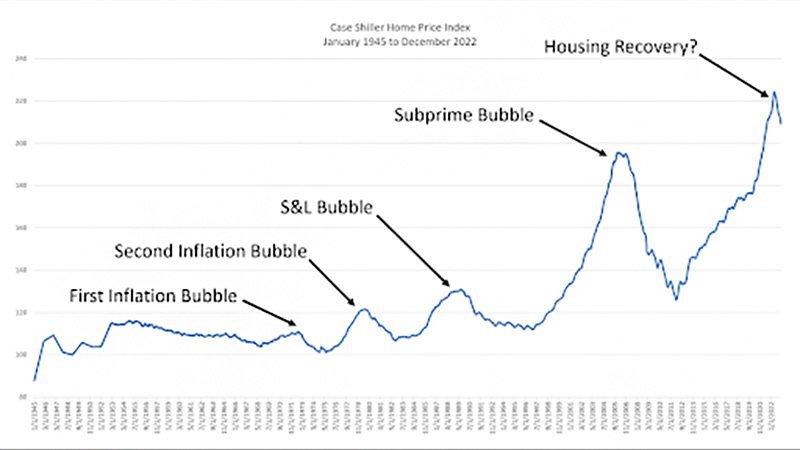
The real estate market is often viewed as a pillar of economic stability, yet it is also characterized by cycles of growth adn decline that can sometimes lead to important financial turmoil. Understanding these cycles—particularly the formation and burst of real estate bubbles—requires a rigorous analytical approach. As property values surge beyond their intrinsic worth, driven by speculation, access to easy credit, and investor psychology, the repercussions can extend far beyond the housing sector, impacting broader economic conditions and individual livelihoods alike.
In this article, we will explore the key indicators and methodologies utilized in identifying real estate bubbles, examining historical case studies that provide insight into past eruptions and their aftermath. By employing a range of analytical tools—from quantitative metrics like price-to-income ratios to qualitative assessments of market sentiment—we aim to equip readers with the necessary framework to discern potential misalignments in the market. This comprehensive investigation will not only clarify the mechanics behind real estate bubbles but also serve as an essential guide for investors, policymakers, and stakeholders in anticipation of future market movements. Through a professional lens, we invite you to delve into the complexities of real estate dynamics and develop a deeper understanding of how to navigate this ever-evolving landscape.
Table of Contents
- Market Dynamics and Economic Indicators in identifying Real Estate Bubbles
- Behavioral Factors Influencing Investor Sentiment and Housing Demand
- Risk Assessment Strategies for Real Estate Investment During Bubble Phases
- Long-Term Implications of Real Estate bubbles on Economic Stability and Growth
- To Conclude
Market Dynamics and Economic Indicators in Identifying Real Estate Bubbles
Understanding the interplay between market dynamics and economic indicators is crucial in recognizing the formation of real estate bubbles. Real estate markets are frequently enough influenced by a variety of factors, including interest rates, housing supply and demand, and local economic growth. When interest rates are low, borrowing becomes cheaper, leading to increased demand for housing. Conversely,if the supply of homes fails to keep pace with demand,prices can escalate rapidly,creating an unsustainable market environment. Observing patterns of rapid price appreciation alongside increasing leverage among buyers can be significant warning signs of a potential bubble.
additionally, economic indicators such as employment rates, GDP growth, and consumer confidence provide invaluable insights into the health of the real estate market. A robust job market and rising GDP typically correlate with increased housing demand, but they can also mask underlying vulnerabilities. Analyzing the relationship between these indicators and real estate prices can reveal discrepancies that suggest overvaluation. To further illustrate this, consider the following table comparing key economic indicators during periods of stable growth versus bubble conditions:
| Indicator | Stable Growth | Bubble Conditions |
|---|---|---|
| Employment Rate | 5% – 6% | Below 5% |
| GDP Growth | 2% – 3% | Above 4% |
| Consumer Confidence | Moderate | Excessively high |
Behavioral Factors Influencing Investor Sentiment and Housing Demand
The interplay of psychological biases and societal norms significantly shapes investor sentiment within the housing market. Various behavioral factors can lead to irrational decision-making, often inflating demand despite underlying economic indicators that reflect instability. Some common tendencies among investors include:
- Herd Behavior: Investors often follow the crowd, buying properties simply because others are doing so, irrespective of personal financial evaluation.
- Overconfidence: many investors believe they can time the market effectively, leading to excessive risk-taking and miscalculations.
- Loss Aversion: The fear of losing out on an opportunity can push individuals towards purchasing real estate, even when market conditions are unfavorable.
Furthermore, external factors such as media influence and economic indicators evoke varying sentiments among investors. Positive news coverage tends to drive optimism, whereas negative reports can suppress demand. The following table summarizes how media narratives can sway investor sentiment:
| media Narrative | Impact on Sentiment |
|---|---|
| Rising Housing Prices | Increased optimism and urgency to purchase |
| Interest rate Hikes | Deterrent to buying, leading to cooling demand |
| Government Housing policies | May either stimulate demand or create uncertainty |
Risk Assessment Strategies for Real Estate Investment During Bubble Phases
Investing in real estate during bubble phases requires a comprehensive understanding of market dynamics and the implementation of robust risk assessment strategies. key strategies include:
- Market Analysis: Evaluate historical price trends and economic indicators to identify potential overvaluation. Analyze local economic factors such as job growth, interest rates, and demographic shifts which impact demand.
- Investment Diversification: Allocate investments across different geographic areas and property types to mitigate risks associated with localized declines in property values.
- Cash Flow Assessment: Ensure that rental income can cover expenses even in a downturn. This ensures that properties remain viable investments despite fluctuations in market conditions.
another critically important aspect is the establishment of exit strategies that consider various market scenarios. Developing a clear plan for liquidation or repositioning can help investors navigate the uncertainties of bubble phases. Consider the following elements when constructing your exit strategy:
| scenario | Action | Timeline |
|---|---|---|
| Market Correction | Sell properties to capitalize on gains | Within 6 months |
| Investor Sentiment Shift | Hold and rent until market stabilizes | 1-2 years |
| Severe Economic Downturn | Liquidate assets at a loss to free up cash | As soon as feasible |
Long-Term Implications of Real Estate bubbles on Economic Stability and Growth
The aftermath of real estate bubbles frequently enough reveals significant repercussions on economic stability and growth. When housing prices eventually plummet, the consequences ripple through various sectors of the economy, affecting both consumers and businesses. This decline can lead to increased unemployment, as companies scale back on hiring or resort to layoffs due to reduced demand for goods and services. Additionally, consumer confidence tends to dwindle during such market corrections, further stifling spending, which is vital for economic expansion. The following points illustrate some of the far-reaching effects:
- Decreased Household Wealth: Homeownership is a primary source of wealth for many families; a drop in home values translates directly to reduced wealth.
- Increased Foreclosures: As homes become unaffordable, many homeowners face foreclosure, leading to a housing market glut that further depresses prices.
- Lower Tax Revenues: Declining property values reduce tax revenues for local governments, impacting public services and infrastructure progress.
The long-term implications extend into institutional sectors as well,shifting perception towards risk management and regulatory measures. Financial institutions,having borne the brunt of defaulted loans,may adopt more stringent lending practices,thereby restricting credit access. This tightening can hinder the ability of potential homeowners and small businesses to invest in property, ultimately cooling the market further. Below is a simplified view of potential policy responses to mitigate these implications:
| Policy Response | Description |
|---|---|
| Stricter Lending Regulations | Enhancing criteria for mortgage approvals to reduce risk exposure. |
| Financial Education Programs | Educating consumers on lasting home-buying practices to prevent future bubbles. |
| Incentives for Affordable Housing | Promoting the development of affordable housing to support broader economic access. |
To Conclude
understanding the dynamics of real estate bubbles requires a comprehensive analytical approach that transcends mere observation. By synthesizing historical data, economic indicators, and market sentiment, we can gain invaluable insights into the cyclical nature of real estate markets. As this article has demonstrated, the interplay of supply and demand, interest rates, and external economic factors plays a pivotal role in identifying potential bubble conditions.Furthermore,recognizing the behavioral elements that drive investor psychology is essential for a holistic analysis. As market conditions evolve, so too must our methodologies for assessing risk and opportunity within real estate investments. Through continuous monitoring and a commitment to informed decision-making, investors and policymakers alike can better navigate the complexities of these markets, mitigating the risks associated with speculative booms and subsequent busts.
Ultimately, by applying rigorous analytical techniques and remaining vigilant in our observations, we can contribute to a more stable real estate landscape—one that supports sustainable growth and mitigates the adverse effects of speculative excesses. As we move forward, it is imperative to remain aware of the lessons learned from past cycles, ensuring that our approach to real estate investing is not only insightful but also resilient in the face of future challenges.